
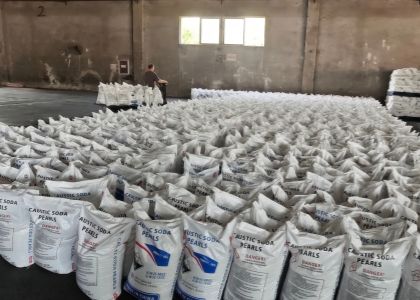
The global chemical manufacturing sector is experiencing a significant rise in demand for essential raw materials, putting renewed focus on global caustic soda supply networks. As primary heavy industries expand output across emerging markets in Africa, Latin America, and Southeast Asia, chemical producers are scaling production capabilities and optimizing international logistics to maintain uninterrupted raw material flow for industrial buyers.
The surge in consumption across key manufacturing processes is reshaping global trade routes for heavy alkalis. Recent market data highlights four core sectors fueling current purchasing patterns:
● Pulp and Paper Industry Expansion: Modern paper mills require continuous supplies of high-purity solid and liquid alkalis for wood chip digestion, lignin removal, and fiber bleaching, ensuring consistent paper tensile strength and high brightness levels.
● Textile Scouring and Mercerization: Rapid growth in garment manufacturing hubs has increased demand for alkaline solutions used in raw cotton processing, fabric degreasing, and dye bath pH regulation.
● Water Treatment and Utilities: Municipal water facilities and industrial manufacturing plants are scaling up procurement for acid effluent neutralization, heavy metal precipitation, and large-scale municipal wastewater processing.
● Alumina and Mining Extraction: Bauxite refining facilities rely heavily on concentrated alkaline solutions to digest aluminum ores during the Bayer process, driving massive bulk order volumes in mining-heavy regions.
Production costs and output volumes remain closely tied to regional energy markets. Electrally intensive membrane-cell chlor-alkali plants require stable power grids to operate at maximum efficiency. Recent stability in industrial energy tariffs has allowed top-tier producers to operate at elevated capacity, helping stabilize market pricing.
Manufacturing facilities with large annual outputs—reaching 120,000 metric tons or more—are capitalizing on economies of scale. By upgrading to energy-efficient ion-exchange membrane technology, primary chemical factories reduce unit electricity consumption while producing highly concentrated solid alkalis with low impurity thresholds, such as reduced sodium chloride and iron content.
To meet this accelerating demand, primary producers are leveraging strategic port proximity and specialized packaging solutions to stabilize the international caustic soda supply. Operating near deep-water maritime ports allows direct container shipping without inland transit bottlenecks, while advanced moisture-proof packaging—such as 25kg double-lined woven polypropylene bags and 1000kg FIBC jumbo sacks—protects chemical purity over long ocean shipping routes.
Maritime freight efficiency plays a crucial role in international competitiveness. Direct port access eliminates domestic freight surcharges, allowing manufacturers to offer competitive Free on Board (FOB) and Cost, Insurance, and Freight (CIF) terms to overseas buyers. Container load optimization, which maximizes 20-foot dry container payloads up to 28 metric tons, significantly reduces shipping overhead per ton.
Procurement executives facing volatile spot market pricing increasingly turn to direct manufacturer contracts to mitigate supply chain disruptions. Recent industry surveys reveal that factory-direct partnerships protect buyers from intermediary markups, fake broker schemes, and unexpected shipping delays.
Top chemical producers now supply a certified Certificate of Analysis (COA) with every outgoing shipment, verifying purity standards before cargo vessels leave the port. This level of quality assurance prevents costly production shutdowns in downstream processing plants.
Looking ahead, chemical industry experts predict that global demand will remain strong through the end of the fiscal year. As industrial infrastructure projects expand and manufacturing plants increase capacity, maintaining robust production capacity, strict quality control, and transparent logistics structures will remain the cornerstone of successful global chemical distribution.
JHY GROUP PTE. LTD. is a premier chemical manufacturer in Tianjin, China. Specializing in high-purity Caustic Soda (99%) with a 120,000-ton capacity, we supply global industries direct from factory.[ read more ]


